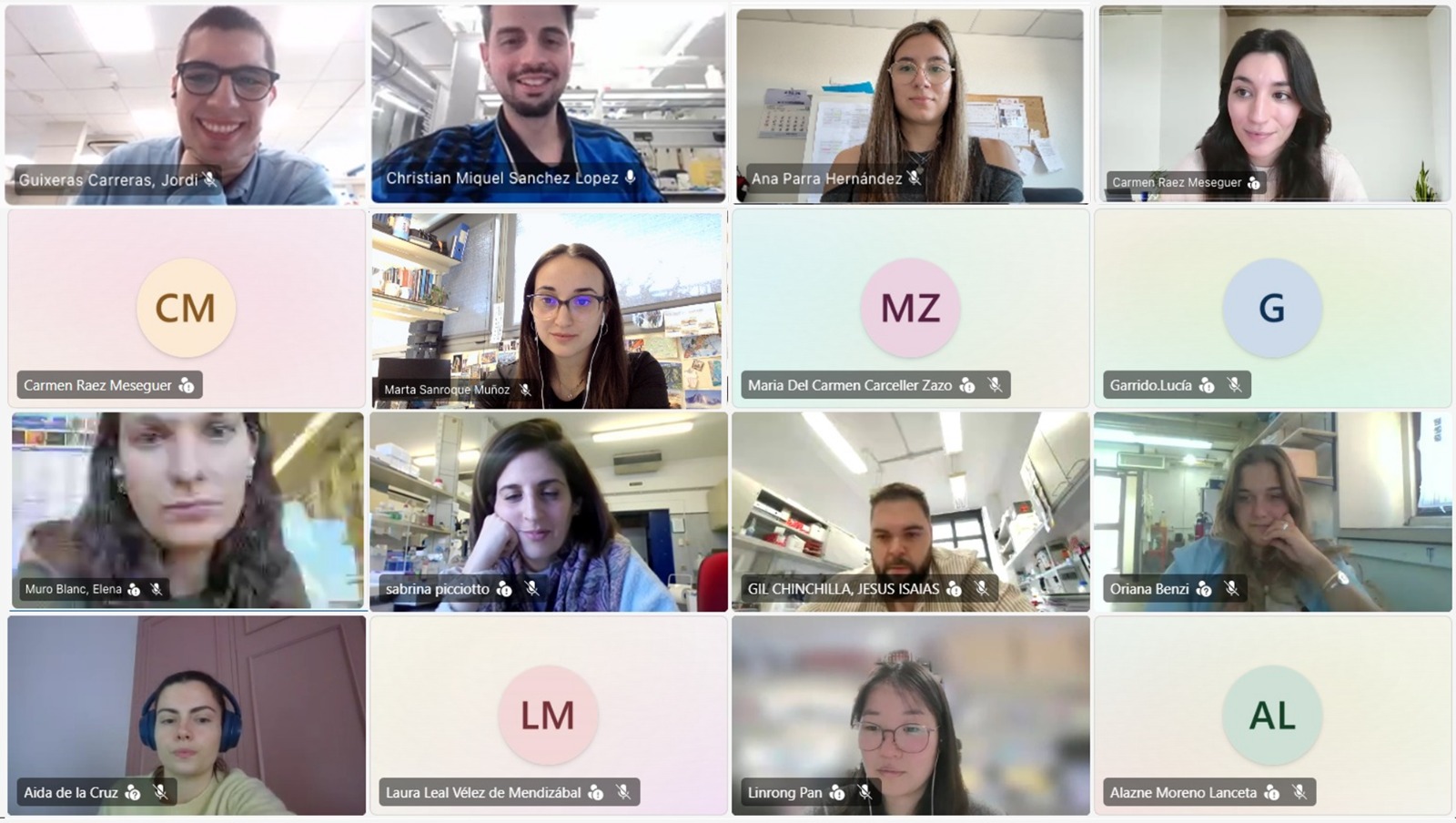
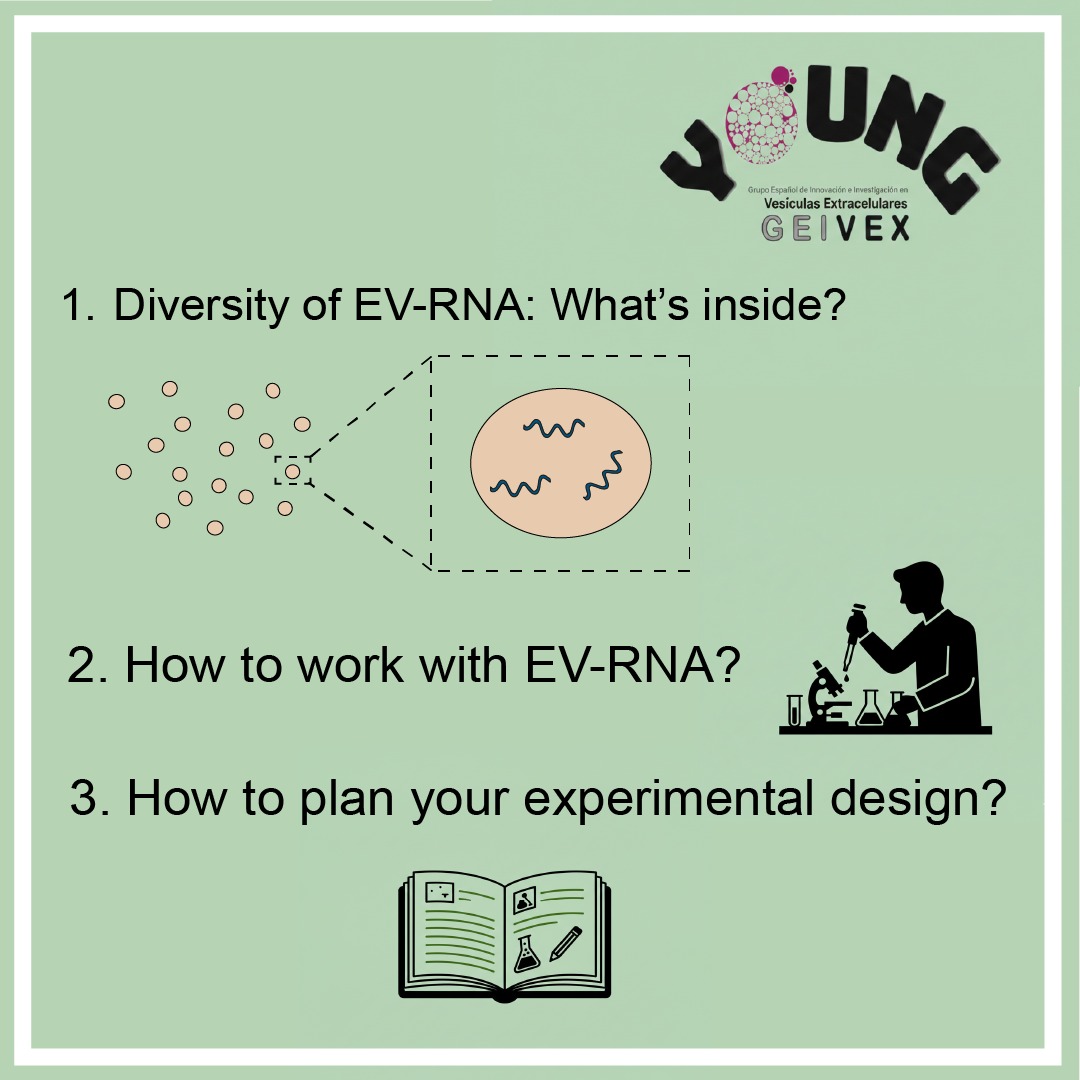
In this seminar, Dr. Sánchez-López examined the biological and technical complexity of RNA associated with extracellular vesicles (EVs). The presentation began with an overview of the diversity and functional relevance of EV-carried RNAs, followed by a discussion of how experimental design influences transcriptomic outcomes. Dr. Sánchez-López addressed key methodological considerations, including RNA isolation strategies, miRNA-focused sequencing approaches, adapter-related biases, and bioinformatic alignment challenges.
Particular attention was given to the practical limitations of working with low-input EV-RNA, such as yield constraints, library preparation bias, mapping difficulties, and appropriate quality control strategies. The seminar concluded with a practical case study from his laboratory, illustrating how pomegranate-derived nanovesicles (PgNVs) were analyzed using a miRNA-centered transcriptomic workflow combined with functional validation assays. Overall, the seminar aimed to provide a balanced perspective on both the opportunities and the technical challenges inherent to EV-RNA research.
The next seminar will take place this April, with the topic to be announced shortly. If you are interested in the bibliography or references used during the seminar, please do not hesitate to contact us.